

What Are Fragrance Notes? Understanding Top, Middle, and Base Notes in Perfume
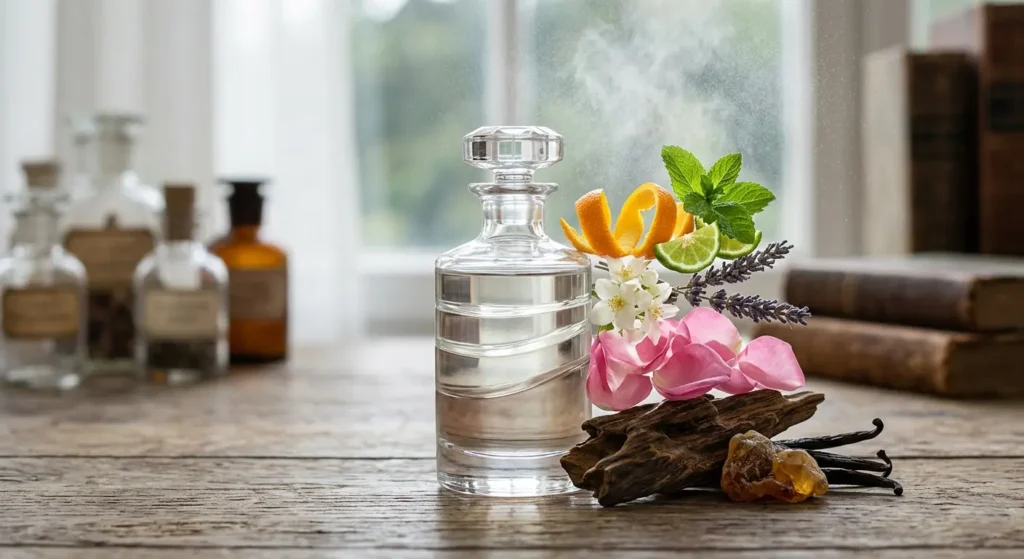
Fragrance notes are the individual scent layers that make up a perfume. These notes work together to create a complete fragrance experience that changes over time after application. Instead of smelling the same from start to finish, a perfume evolves in stages. Each stage reveals different notes, forming what is known as the fragrance pyramid.
What Do Fragrance Notes Mean in Perfume?
In simple terms, fragrance notes are the building blocks of a perfume’s scent composition. Perfumers blend different ingredients to create these layers, ensuring balance, depth, and complexity.
Each note is designed to appear at a specific time based on how quickly it evaporates from the skin.
If you’re new to this concept, start with our guide on what perfume is and how it works
The Fragrance Pyramid Explained
Perfumes are structured into three main layers:
- Top notes (head notes)
- Middle notes (heart notes)
- Base notes (soul notes)
This layered structure allows the scent to develop gradually, rather than remaining static.
Top Notes: The First Impression
Top notes are the scents you smell immediately after applying a perfume.
They are:
- Light and fresh
- Highly volatile (evaporate quickly)
- Responsible for the first impression
Common top notes include citrus, light fruits, and fresh herbal elements. Although they fade quickly, top notes play a crucial role in attracting attention and shaping initial perception.
Middle Notes: The Heart of the Fragrance
Middle notes emerge once the top notes begin to fade. They form the core identity of the perfume.
They are:
- More balanced and rounded
- Longer-lasting than top notes
- Essential for defining the scent profile
Popular middle notes include floral elements like rose and jasmine, as well as spices and soft woody tones.
Base Notes: Depth and Longevity
Base notes appear last and provide the foundation of the fragrance.
They are:
- Rich and deep
- Slow to evaporate
- Responsible for longevity
Common base notes include musk, amber, vanilla, and woody accords. These notes linger on the skin for hours and create the lasting impression of a perfume.
How Fragrance Notes Develop Over Time
When you apply perfume, the scent transitions through all three layers:
- Top notes → immediate freshness
- Middle notes → main body of the scent
- Base notes → lasting depth
This process is known as the dry down, where the final scent settles on your skin.
To understand how long each stage lasts, learn why some perfumes last longer than others
Why Fragrance Notes Matter When Choosing a Perfume
Understanding fragrance notes helps you:
- Identify scents you enjoy
- Choose perfumes that match your personality
- Predict how a fragrance will develop
- Avoid buying perfumes that don’t suit your taste
For example:
- If you like fresh scents → look for citrus top notes
- If you prefer bold scents → choose woody or musky base notes
Not sure how to choose the right scent? read our guide on how to choose the perfect perfume
Fragrance Notes and Perfume Quality
The way notes are blended directly affects:
- Longevity – how long the perfume lasts
- Sillage – how far the scent projects
- Balance – smooth transition between layers
- Complexity – richness of the fragrance
High-quality perfumes use carefully selected ingredients to ensure each note complements the others.
You can explore this further here, what makes a perfume original and high quality
Do Fragrance Notes Smell the Same on Everyone?
Not always. Fragrance notes interact with your:
- Skin chemistry
- Body temperature
- Environment
This means the same perfume can develop slightly differently on different people.
To understand this better, learn why perfumes smell different on your skin
Fragrance Families and Common Notes
Fragrance notes are often grouped into scent families, such as:
- Floral – rose, jasmine
- Woody – sandalwood, cedar
- Citrusy – lemon, bergamot
- Fresh – aquatic, green notes
- Oriental – warm, spicy, sweet
These categories help you quickly identify the type of perfume you might enjoy.
Experience Fragrance Notes in Real Perfumes
Understanding fragrance notes becomes easier when you experience them in real blends. Original perfumes are carefully crafted to ensure:
- Smooth transitions between notes
- Balanced composition
- Long-lasting performance
Explore our original blended perfume collection to experience layered fragrances


