

What Is Perfume? Meaning, Composition, and How It Works
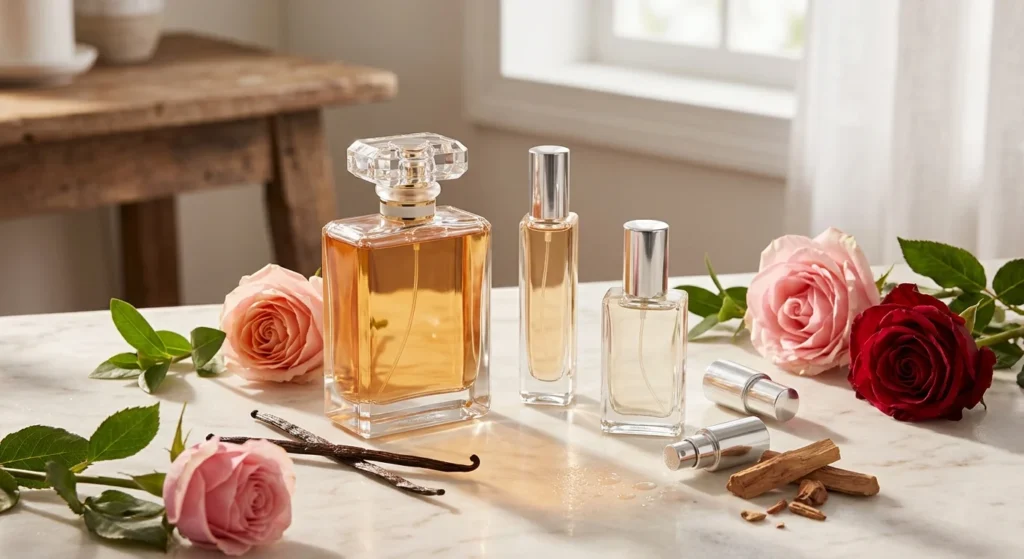
Perfume is a fragrant liquid blend made from aromatic ingredients such as essential oils, fragrance compounds, alcohol, and fixatives. It is designed to create a pleasant scent that enhances personal presence and leaves a lasting impression on the skin. But perfume is more than just a smell, it is a carefully crafted composition where different scent elements work together to create a unique and evolving aroma.
What Does Perfume Actually Contain?
A perfume is not a single ingredient, it is a structured blend.
Most perfumes contain:
- Fragrance oils – the core scent components
- Alcohol or solvent – helps diffuse the scent
- Fixatives – stabilize and extend longevity
These ingredients are blended in precise proportions to create a balanced and long-lasting fragrance.
To understand how these ingredients work together in detail, learn how perfumes are made
How Perfume Works on the Skin
When you apply perfume, it doesn’t smell the same throughout the day. This is because perfume evolves in stages.
- Top notes – the first scent you smell (light and fresh)
- Middle notes – the core of the fragrance
- Base notes – deep, long-lasting foundation
As the perfume interacts with your skin, it gradually evaporates and reveals different layers of scent over time.
If you want a deeper breakdown, explore fragrance notes and how they develop
Why Perfume Smells Different on Everyone
Perfume reacts differently depending on:
- Skin type
- Body temperature
- Environment and weather
This is why the same fragrance can smell slightly different on two people. The interaction between fragrance oils and your skin chemistry affects how the scent develops and lasts.
What Makes a Perfume High Quality?
Not all perfumes are created equal. The quality of a perfume depends on several key attributes:
- Ingredient quality – better raw materials create richer scents
- Concentration – higher concentration means longer-lasting fragrance
- Sillage – how far the scent projects
- Longevity – how long the scent stays on skin
High-quality perfumes are carefully formulated to balance all these elements.
You can learn more about this here: what makes a perfume original and high quality
Perfume vs Fragrance: Is There a Difference?
The terms “perfume” and “fragrance” are often used interchangeably, but there is a slight distinction:
- Fragrance → a general term for any scent
- Perfume → a specific liquid product applied to the body
In simple terms, perfume is a type of fragrance, but not all fragrances are perfumes.
Why People Use Perfume
Perfume serves multiple purposes beyond just smelling good:
- Enhances personal style
- Creates emotional and sensory impact
- Builds identity and confidence
- Leaves a memorable impression
For many, perfume becomes a signature element of personality.
Original vs Fake Perfume
In today’s market, not every perfume labeled as “original” is truly authentic.
Original perfumes:
- Use verified ingredients
- Maintain consistent scent profiles
- Last longer on skin
- Reflect true craftsmanship
Counterfeit or duplicated perfumes often lack depth, longevity, and quality.
Before buying, it’s important to understand the difference between original and fake perfumes
How to Choose the Right Perfume
Choosing a perfume depends on:
- Personal preference (floral, woody, citrusy)
- Occasion (daily wear, formal, evening)
- Climate (important in Pakistan)
Testing a fragrance on your skin is the best way to understand how it develops over time.
If you’re unsure where to start, learn how to choose the right perfume for your personality
Perfume as a Personal Signature
A well-chosen perfume becomes part of your identity. It reflects your mood, style, and presence in a subtle yet powerful way.
At its core, perfume is not just a product, it is an experience shaped by composition, chemistry, and personal expression.
Explore Original Blended Perfumes
If you’re looking for perfumes that focus on authenticity, performance, and unique scent creation, explore carefully crafted blends designed for long-lasting wear.
Browse our original perfume collection


